


ArticlesTopic
Security
How business websites really get hacked and how to stop it: plugins, logins, servers, backups and the routine upkeep that keeps your site and your customers safe.
- 15articles
- 101minutes of reading
- 13infographics
- Nov 8latest article

How Card Skimmers Hide in WordPress Checkouts and Booking Forms
Magecart-style skimmers can copy every card typed into a WooCommerce or booking checkout while orders keep going through normally. This guide explains how they get in…

Forgotten WordPress Files That Leak Your Passwords: A Cleanup Checklist
Leftover files like debug.log, wp-config.php backups, exposed .git folders and old staging sites can hand attackers your database password without any hacking skill. This guide explains…

Your WordPress Padlock Isn’t Enough: SSL Gaps and Headers
A padlock in the browser means the connection is encrypted, not that your WordPress site is set up securely. We cover common SSL/TLS misconfigurations, how to…
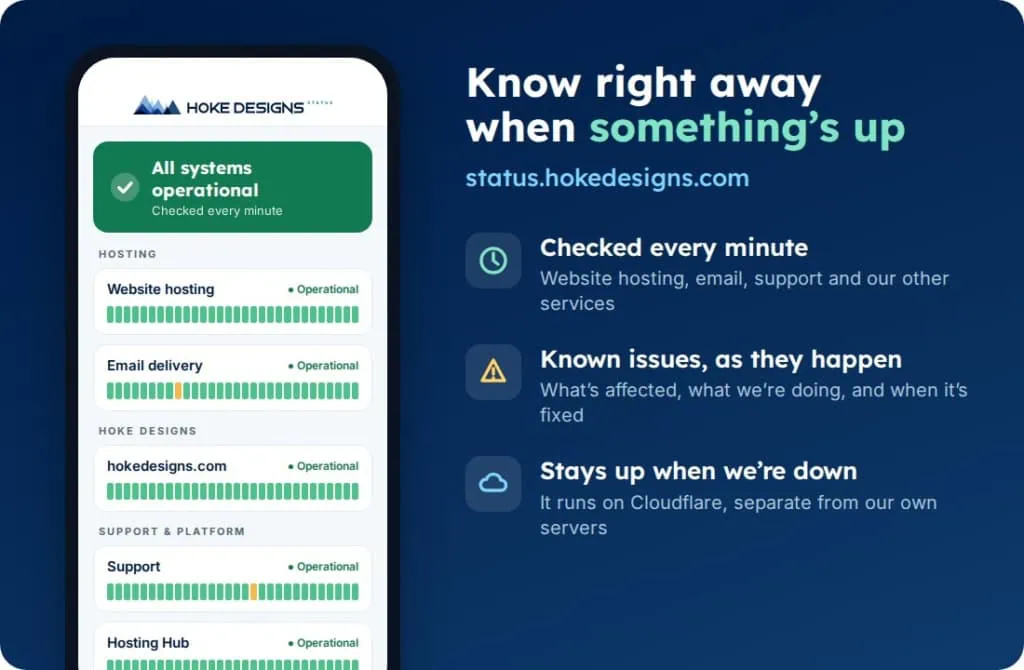
Introducing status.hokedesigns.com: Live Status for Every Hoke Designs Service
Our new status page shows, minute by minute, whether website hosting, email, support and our other services are running normally, along with any known issues and…

PHP2Shell: What It Is and How We Protected Your Website
PHP2Shell is a pair of critical flaws in PHP, the engine underneath WordPress and most of the web. Here’s what it means in plain English, why…

Can Your WordPress Site Be Hacked Without You Knowing?
Many WordPress infections are built to stay invisible to the site owner. They show spam only to search engines or redirect only some visitors. Learn the…

Old Logins and Admin Accounts: A WordPress User Audit for Small Businesses
Old user accounts, shared logins and staff with Administrator access they don't need are easy ways into a small business WordPress site. This covers why they…

Does Your Website Need Backups? Why They Fail and How to Plan Recovery
Your website needs backups stored apart from the site itself, and you need to know they restore. This guide covers the three common ways sites get…

Is That Email Really From Them? Spotting Spoofed Senders
A familiar name in the "From" line doesn't prove an email came from that business. Learn how display-name spoofing, look-alike domains and hijacked accounts work. Then…

How Social Engineering Tricks Smart People and How to Stop It
Social engineering works by exploiting trust, authority and urgency, so being smart offers little protection. This guide shows how phishing emails, fake support calls, smishing texts…

Is Your Contact Form a Security Risk? SQL Injection, XSS and Spam Bots
Contact forms, booking requests and checkout pages accept text from strangers, which makes them a favorite target. Here's how SQL injection, cross-site scripting and spam bots…

Why Nulled WordPress Themes and Plugins Put Your Site at Risk
"Free" pirated copies of premium WordPress themes and plugins often carry backdoors, malware and hidden spam links. Here's what researchers found inside them, the warning signs…

How to Protect Your WordPress Login From Brute-Force Attacks
Bots are trying to log into WordPress sites all the time. Wordfence blocked more than 55 billion password attacks in 2024. Here's how brute force and…

Six Security Gaps in DIY Website Hosting and How to Close Them
Self-hosted sites rarely fail from dramatic hacks. Instead, routine work stops happening: plugin updates, server patches, login cleanup, certificate renewals and offsite backups. We walk through…

Abandoned WordPress Plugins: How to Find and Fix Them
Most WordPress vulnerabilities are in plugins and themes, not core, and an abandoned plugin will never get the fix it needs. Your dashboard may not even…
No Security articles match that.
Hoke Designs
Want this handled for you?
These articles come from the work we do every day. If you would rather have us take care of it, start with our managed hosting & security service.
